
Vinegnetre Austria Toll Guide
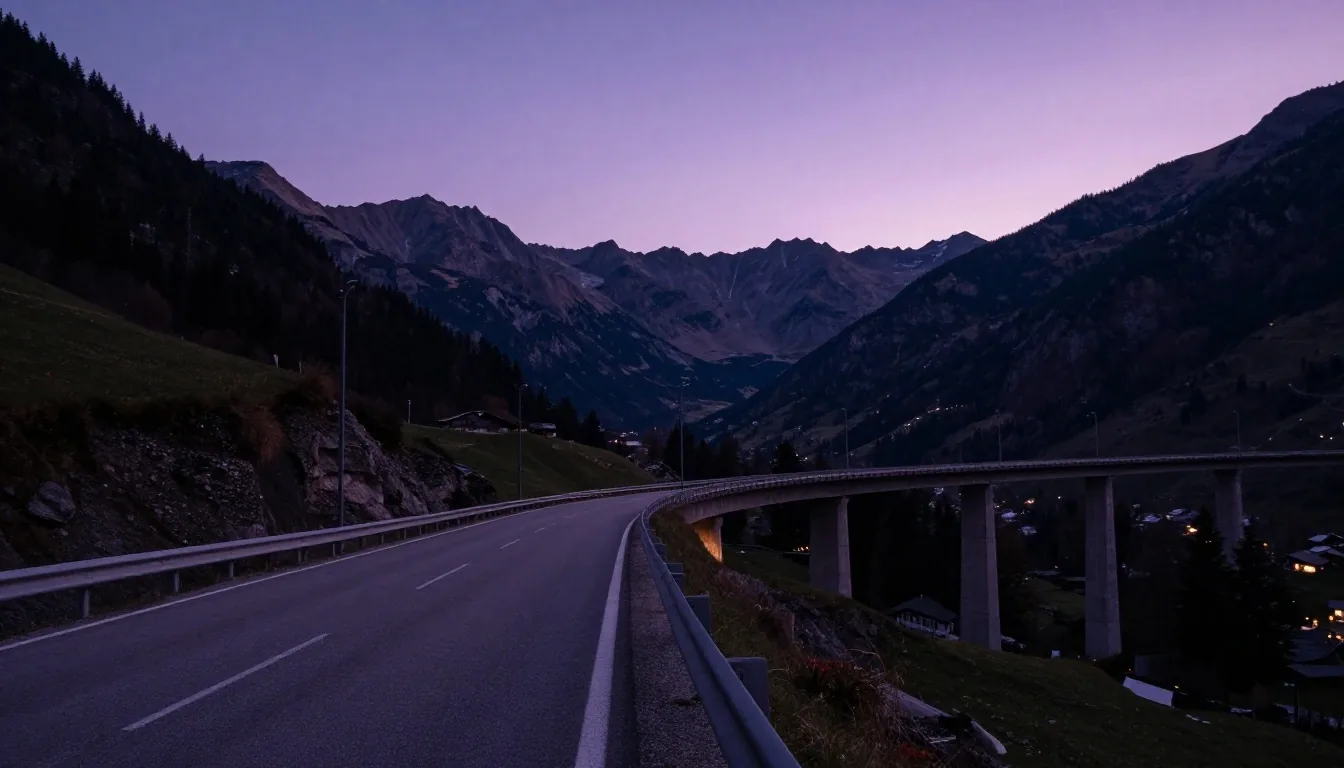
Austrian alpine motorway corridor at dusk with electronic gantry lighting
Corridor Dispatch & Border Exemptions

Plan routes across Austrian motorway transit corridors

Austria occupies a central crossroads connecting northern Europe with the Mediterranean and eastern member states. Millions of private motorists traverse Austrian highways annually, heading toward Italy, Slovenia, Croatia, and Germany. Planning an efficient route requires understanding which motorways require standard vignettes, where section tolls apply, and how to take advantage of statutory toll-exempt border corridors. Vinegnetre provides practical route planning insights for the primary east-west and north-south transit corridors to help you budget travel times and toll costs accurately.

Federal Exemption Registry

Official toll-free border segments under Austrian federal law

Under Austrian federal road legislation, specific short motorway links starting from national borders remain exempt from standard vignette mandates. These statutory corridors allow cross-border regional mobility and direct connections to nearby alpine passes without requiring immediate payment, provided vehicles do not proceed past designated interchange markers.

A12 INNTAL Tyrol

German Border to Kufstein-Süd

Transit from the German A93 border crossing at Kiefersfelden up to Exit 6 (Kufstein-Süd) does not require a vignette. Driving past Kufstein-Süd toward Wörgl or Innsbruck triggers mandatory camera inspection.

Toll status Exempt to Exit 6
A1 WEST Salzburg

Walserberg to Salzburg-Nord

Cross the Bavarian frontier at Walserberg and access Salzburg city interchanges up to Salzburg-Nord (Exit 288) without purchasing a toll product. Eastbound transit toward Linz and Vienna requires an active vignette.

Toll status Exempt to Exit 288
A14 RHEINTAL Vorarlberg

Hörbranz to Hohenems

From the German border near Lindau, motorists may travel across Lake Constance lowlands to Exit 23 (Hohenems) free of toll charges. This grants direct access to Swiss border crossings at Diepoldsau.

Toll status Exempt to Exit 23
A26 LINZER Upper Austria

Linzer Autobahn (Stage 1)

Newly opened bypass tunnels on the A26 urban expressway project remain exempt from standard vignette validation during early completion phases, while all adjoining A7 and A1 connectors enforce toll validation.

Toll status Phase Exemption
Corridor Specifications

Core alpine motorway passages analyzed by transit corridor

Traversing the Austrian Alps involves distinct structural challenges. Depending on whether your journey crosses the central alpine divide or skirts the northern plain toward Vienna, you will encounter varying combinations of standard electronic vignettes and dedicated mountain pass section tolls.

Critical Transit Rule

Section toll tunnels (such as the Brenner A13, Tauern A10, and Arlberg S16) do not require a vignette on their designated pay sections, but approaching them across federal motorways does. Ensure all required clearances are active prior to border arrival.

Compare vehicle category requirements
Illuminated Austrian motorway toll plaza at night
Electronic Video Toll Corridor
A12 & A13 Tyrol Corridor
Alpine Pass

The western transit: Germany to Italy via Tyrol (A12 & A13)

The most heavily traveled transit route across the Alps runs from Bavaria across Tyrol to South Tyrol in Italy. Drivers enter Austria from the German A93 at Kiefersfelden, continuing onto the Austrian A12 Inntal Motorway past Kufstein and Innsbruck, before turning south onto the A13 Brenner Motorway. The section from the German border to Kufstein-Süd is toll-exempt; no vignette is required if you exit at or before Kufstein-Süd. However, continuing toward Innsbruck requires an active vignette on the A12, followed by a separate section toll payment for the A13 up to the Italian border.

A12 Inntal Autobahn Standard Digital Vignette
A13 Brenner Pass Section Toll (Video / Gate)
A10 TAUERN Adriatic Passage
Twin Tunnels

The Salzburg to Adriatic corridor (A10 Tauern Motorway)

Motorists traveling from central Germany toward Croatia, Carinthia, or the Italian Adriatic coast typically choose the A10 Tauern Motorway. Starting at the Walserberg border near Salzburg, the route runs south past Hallein, Bischofshofen, and through the central alpine ridge via the Tauern and Katschberg Tunnels, terminating at Villach. This corridor requires both a standard vignette for the open motorway sections and an additional section toll for the mountain tunnel chain between Flachau and Rennweg. Peak holiday weekends frequently see heavy traffic at the St. Michael toll gates.

Tauern & Katschberg Tunnels Section Toll (Flachau-Rennweg)
Approach Carriageways Standard Digital Vignette
A1 WEST East-West Spine
Vignette Only (No Section Toll)

The eastern gateway: Germany to Vienna and Hungary (A1)

Connecting Salzburg, Linz, St. Pölten, and Vienna, the A1 West Motorway serves as Austria's primary east-west economic spine. The segment between the German border at Walserberg and the Salzburg-Nord interchange is exempt from vignette requirements, allowing motorists to access Salzburg city without toll products. Driving past Salzburg-Nord toward Vienna requires a valid vignette. The A1 is entirely free of section tolls, meaning a standard 1-day, 10-day, 2-month, or annual vignette covers the entire 300-kilometer drive to the capital and onward via the A4 toward Budapest.

Salzburg-Nord to Vienna Single Vignette Valid for All Interchanges
300+ km
A9 PYHRN Slovenia Corridor
Bosruck & Gleinalm

The southern passage: Graz to Slovenia (A9 Pyhrn Motorway)

Travelers driving from the Czech Republic or eastern Austria toward Slovenia and Zagreb use the A9 Pyhrn Motorway. Running south from the Voralpenkreuz interchange near Wels, the A9 crosses Upper Austria and Styria, passing Graz before reaching the Spielfeld border. This route combines standard vignette requirements on open carriageways with two separate section tolls at the Bosruck and Gleinalm Tunnels. Motorists can bypass these tunnels using regional alpine roads, but mountain passes add significant driving time, steep grades, and winter safety hazards.

Bosruck Tunnel Section Toll Tariff
Gleinalm Tunnel Section Toll Tariff
A14 & S16 Vorarlberg Corridor
Partial Exemption

Lake Constance and Vorarlberg transit (A14 Rheintal Motorway)

Entering Austria from Lindau in Germany, the A14 Rheintal Motorway traverses Vorarlberg toward Switzerland and Liechtenstein. Under statutory toll exemptions, the section between the German border at Hörbranz and the Hohenems junction (Exit 23) does not require a vignette. This allows cross-border shoppers and motorists heading toward Swiss cantons via Diepoldsau to transit toll-free. However, continuing south past Hohenems toward Bludenz or entering the S16 Arlberg corridor requires an active vignette, and using the Arlberg Tunnel requires a separate section toll.

S16 Arlberg Road Tunnel Separate Video Section Toll Applicable
View Arlberg rates →
S10 & A5 Czech Links
Immediate Camera Enforcement

The Czech border to Vienna connections (S3, S10, and A5)

Motorists arriving from Prague or Brno enter Austria through Lower or Upper Austria. From Prague, drivers cross at Wullowitz onto the S10 Mühlviertler Schnellstraße, connecting to the A7 and A1 toward Vienna or Linz. From Brno, drivers take the Czech D52 across the border at Drasenhofen onto the Austrian A5 Nord Autobahn, providing a direct dual-carriageway link into Vienna. Both routes require standard vignettes immediately upon entering the Austrian expressway network, with automated camera enforcement active directly at border merge lanes.

Important compliance note: Unlike the German borders at Kufstein and Walserberg, there are no toll-free buffer zones on the S10 or A5 expressways. Drivers must purchase and activate an electronic vignette before crossing the physical border.

Corridor Planning Principle

Never enter an Austrian autobahn without verifying corridor coverage

Whether you are passing through for four hours on a Munich-to-Venice run or touring Austrian lakes over a fortnight, toll credentials should be registered to your vehicle plate before reaching the frontier. Automated overhead cameras verify compliance within 300 meters of highway entry.

ASFINAG
URBAN TRANSIT Vienna Beltway

Navigating Vienna's metropolitan motorway ring

The Vienna metropolitan area features a dense highway network, including the A21 Außenring Autobahn, the S1 Wiener Außenring Schnellstraße, the A22 Donauufer Autobahn, and the heavily congested A23 Südosttangente. Every federal highway within Vienna requires a valid vignette. There are no urban motorway toll exemptions within Vienna city limits. Visitors staying in central districts can park at perimeter Park-and-Ride facilities located near motorway exits, using public U-Bahn subways to avoid city parking fees and congestion.

Park-and-Ride (P+R) Strategy

Major P+R hubs like Erdberg (A23 exit), Leopoldau (S1/S2), and Hütteldorf (A1 approach) cost approximately €4.10 per day, offering direct subway transfers without navigating downtown short-term parking zones (Kurzparkzonen).

Vienna metropolitan motorway interchange at dusk
EFFICIENCY AUDIT Secondary Roads

Comparing toll motorways with non-toll regional detours

Attempting to avoid tolls by using regional secondary roads (Landesstraßen B and L) is rarely efficient for long-distance transit. Austrian regional roads run through small towns, enforce 50 km/h urban speed limits, feature numerous traffic circles, and are subject to strict heavy-vehicle transit bans. In mountain areas, non-toll passes involve steep ascents, narrow hairpin curves, and frequent winter closures. The fuel consumed during stop-and-go driving on secondary roads often exceeds the modest cost of a 1-day or 10-day vignette.

Motorway Transit (Autobahn A1/A10/A12)
  • 130 km/h statutory highway speed limit (100 km/h under IG-L environmental zones)
  • Separated carriageways, gentle gradients, and year-round continuous winter clearance
  • Direct service stations (Raststationen) with high-speed DC charging stations
Secondary Detours (Landesstraßen B & L)
  • Frequent 50 km/h and 30 km/h municipal speed limits with stationary radar enforcement
  • Challenging 12–16% alpine pass gradients with mandatory snow chain regulations in winter
  • Local municipal transit bans preventing non-resident cut-through traffic during holiday jams
Border Operational Intelligence

Border checkpoint traffic flows and waiting times

During high summer seasons and winter ski peaks, border crossings between Germany and Austria (Suben on the A8, Walserberg on the A1, Kiefersfelden on the A12) experience heavy traffic queues. Waiting lines also form at southern exits into Slovenia (Karawanken Tunnel on the A11 and Spielfeld on the A9). Planning your departure during early morning or late evening hours, ensuring your digital vignette and section tolls are active in advance, and monitoring digital traffic feeds reduces delays at physical toll barriers.

German Entrances

Suben (A8) & Walserberg (A1)

Major transit funnels from Bavaria. Friday afternoons and Saturday mornings during July and August routinely generate 30 to 90-minute border delays. Take advantage of automated green video toll lanes where available.

Peak Hours: Sat 07:00–14:00
Tyrolean Artery

Kiefersfelden & Brenner (A12/A13)

Tyrolean sectorial truck bans and dosage metering (Blockabfertigung) frequently cause backups that spill into general passenger lanes. Check Tyrolean traffic cameras before departing Munich.

Peak Hours: Thu/Fri/Sun 15:00–19:00
Slovenian Exits

Karawanken (A11) & Spielfeld (A9)

Single-bore transit through the Karawanken tunnel creates substantial bottlenecks during weekend holiday migrations toward Istria and Dalmatia. The Spielfeld crossing on the A9 offers a flatter alternate passage.

Peak Hours: Fri 14:00–21:00, Sat 05:00–16:00
Summary Guide Expense Structure

Comprehensive route budgeting summary

When calculating total road travel expenses across Austria, incorporate three distinct items: standard vignette fees covering your travel days, section toll charges for alpine tunnels on your specific route, and applicable fuel or electric charging costs. Keep all digital receipts and physical payment records accessible throughout your journey. Verifying all credentials before setting out ensures seamless travel through the Austrian motorway network.

1. Standard Vignette Time-Based
2. Section Tunnels Per-Passage
3. Border Buffers Statutory Only
Review special tunnel section tolls
Route Planning Inquiries

Frequently asked transit & corridor questions

Clear practical guidance on border exemptions, camera checks, and tunnel tolls.

Transit Desk Support

Need individual assistance regarding route selection, heavy trailers, or high-roof camper vans? Our Vienna service desk provides driver support.

Contact our transit planning desk

How do I know where the toll-free border section ends?

Toll-free border sections end strictly at the first designated municipal interchange, such as Kufstein-Süd on the A12, Salzburg-Nord on the A1, or Hohenems on the A14. Clear overhead signs marked with vignette icons indicate the commencement of mandatory toll enforcement immediately following the exit slip road. Passing these exits without a valid toll product triggers automated photo capture.

Do I need a vignette if I only use the A13 Brenner Motorway?

If your vehicle travels exclusively on the A13 Brenner Motorway from Innsbruck-Süd to the Italian border at Brenner Pass, you only pay the specific A13 section toll; a standard vignette is not required for that section. However, if you enter from Germany via the A12 Inntal Motorway past Kufstein-Süd to reach the A13, an active vignette is required for the A12 segment.

Can I purchase a single 1-day vignette for transit across Austria?

Yes. Under current Austrian toll regulations in 2026, a 1-day digital vignette is available exclusively online. It is valid on the single calendar day selected from 00:00 to 23:59. This option provides ideal budgeting for drivers making a swift same-day transit crossing between Germany and Italy or Slovenia without requiring a 10-day pass.

What happens if I make a wrong turn onto an Austrian motorway without a vignette?

Austrian automated cameras capture license plates continuously across all entry slips. If you mistakenly enter a toll motorway without an active digital vignette or affixed sticker, there is no retroactive grace period. A substitute toll payment (Ersatzmaut) of €120 for passenger vehicles or €65 for motorcycles will be issued. It is essential to activate your digital vignette before crossing the border.
Independent Customer Assistance

Vienna Service Center & Transit Planning Desk

Vinegnetre operates from central Vienna, offering independent guidance, route planning advice, toll duration comparisons, and assistance for motor vehicle drivers navigating Austrian motorways.

Vinegnetre Service Center Rotenturmstraße 5-9, 1010 Wien, Austria
Monday – Friday: 08:00 – 18:00
Pre-Departure Readiness

Prepare your alpine transit corridor with accurate toll clearance

Compare available validity durations, verify tunnel section requirements, and confirm that your license plate registration is verified before setting out on the road.